



 As black hair care specialists, we see a lot of questions about African American hair. Our most frequently asked questions include:
- Why is my / my daughter’s hair so dull?
- Why is my / my daughter’s hair so dry?
- How do I comb my daughter’s kinky hair?
All of these questions and more are answered in this guide. I previously wrote a short general guide called: African and Biracial Children’s Hair Care tips. That guide gives some rules-of-thumb that are useful in developing your own hair care regimen or one for your child.
However, we have had many requests from people are requesting more detail as to exactly what to do. Unfortunately, I can’t tell you exactly what’s best for you or for your child. I purposely avoided a cookbook approach in the original guide, because proper maintenance of hair is more of an art than a science.
Every person’s hair is slightly different and therefore requires a slightly different maintenance routine. Even my two daughters, with the same father and mother, have different hair types. I find that an oil that is great for one is too heavy for the other. After years of trial and error that I have developed regimens that work best for each of the three of us. I am still tweaking those as I find new products and as I gain more experience. But, I will share my routines with you. These should be useful starting points for you to develop your own routine.
We are receiving a lot of requests from Caucasian mothers who have adopted children of African descent and know almost nothing about black hair care. Most African Americans are multi-racial.
African American hair has a wide variety of textures and needs.
Expectations for African American hair
The number one complaint we get about black hair is that it looks dry or dull. Before you go too far to make your natural hair full of sheen and shine, it’s best to have the proper expectation. Natural Black or African hair will not be as shiny as permed hair or Caucasian hair.
A major part of what makes hair shiny is the structure of the hair, not just the amount of oil or moisture it contains. If the cuticles lay flat (smooth hair), the hair will reflect light better (translated will appear shiny). If the cuticles are raised, the hair will absorb light (translated will appear more dull).
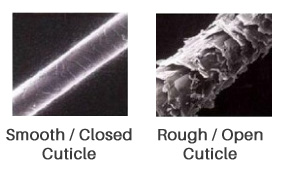
Unless you change the structure of the hair (as in getting a perm or relaxer for us African Americans), black hair will only be so shiny. The practice of applying a bunch of grease to make it shinier, can actually end up damaging the hair. Having said that, natural African hair can appear healthy, smooth and have a nice healthy sheen.
Another complaint we sometimes get (again it seems usually from White mothers) is that their child’s hair is too curly or too frizzy. There are some things you can do to control frizziness and curliness.
But, if you want to effect “permanent” (permanent until it grows out anyway) changes, you are looking at a chemical process. One thing we often advise mothers about though is please do not expect your child’s hair to be like yours. And, please do not make her feel as though something is wrong with her hair because it’s “frizzy” or curly.
You should picture your child’s hair as a collection of fine fibers. You should treat it as gently as you would a fine washable silk blouse. The better you treat her hair, the easier it will be to grow and the better it will look. You should be aware that African hair and biracial hair tends to be drier than Caucasian hair.
The structure of our hair makes it more difficult for the oils to work their way from the scalp to the ends of the hair. Because our hair is kinky, it tends to tangle more and pulling these tangles out can cause breakage. In spite of appearances, black hair and biracial hair tends to be more fragile than Caucasian hair.
The lack of moisture and elasticity and the kinks that get grabbed when styling or combing make for hair that can be broken easily. Someone once asked me if natural hair is meant to be combed. Actually, the answer probably is no. I don’t think our hair was structured to be combed at all. So, as long as we’re going to do it, we have to do it causing the least amount of damage possible.
Both of my daughters have natural hair. We receive a lot of compliments about their hair. We have a mixed heritage (as do most African Americans). But, many of the same things I do for them can be adapted for biracial hair care. Here are my “secrets”.
Tools for maintaining African American hair
Before you set out to perform any task, it's important to make sure you have the right tools. While many products can be picked up on the cheap in the drug store or at your grocery store, you owe it to yourself to get the best products you can afford. While we don't believe in paying a lot of money for fancy packaging, a name brand or a foo-foo salon, we know that there are much better products available from specialty stores like Treasured Locks or even your local salon.
- Wide tooth comb or pick or brush made for African American hair. We like “detangling” combs like the NuBone and the Knot Genie
- Good moisturizing and cream conditioner
- Knot No More is a must. Not only is it good for removing braids, twists, etc. without damaging the hair. It's amazing for every day comb outs. It's the product you wish your mother had when you were young.
- Deep conditioning like Deep V Conditioner- once a month along with the HydraCap
- Satin sleep cap or satin pillow cases
- Spray bottle to spritz hair in case you just want to hit it with some water to comb
Tips for combing out Black hair
This section will be particularly important to those of you who have not worked with kinky hair.
- Never try to comb out kinky hair while it is dry.
- Use a moisturizer to provide elasticity to the hair and to reduce friction.
- Be sure you have a wide tooth comb. You might want to look for a “detangling” comb. If you’re used to fine tooth combs, it might look a little strange to you. But, generally speaking, the farther apart the teeth the better.
- Do not use bristled brushes because I find they tend to grab the hair. I have a Knot Genie which does a great job on the girls’ natural hair. It’s a combination comb and brush in one device. It’s shaped like a brush, but has round teeth more like a comb.
- Be patient and gentle when combing kinky hair. If your daughter is screaming, you might want to consider that you are pulling too hard.
How to comb
- Begin by working in sections.
- Part the hair and tie off the part I am not working on at the time.
- Gently grasp the hair near the scalp with my free hand and work the comb against that hand, rather than against the scalp.
- Comb gently beginning near the roots and work your way up- until all kinks are free.
- Tie that section off and start on the next section.
Tips for washing Black hair
I wash their hair about once a week. In the winter this might stretch out a little longer. I wash more often in the summer. But, one of the mistakes non-African parents of Biracial or African children commonly make is to wash their hair too frequently. Many of my Caucasian friends wash their hair daily. In a child with Black or African hair, this can lead to dullness and dryness. I like to use different shampoos to eliminate the possibility of build-up from a particular shampoo.
If your child is very young (too young to keep her eyes closed), use a no tears baby shampoo. These shampoos contain agents that keep the eyes from stinging. We do not sell any no-tears shampoos. But, these shampoos can be drying, especially for Black hair care. So, transition to a nice mild shampoo as soon as possible.
The washing process
- Wash gently, but thoroughly, massaging the scalp while washing.
- When you dry, blot with a towel rather than rubbing vigorously.
- Avoid heat as much as possible for drying.
- Allow the hair to air dry or you can even use a conditioning cap to drive some of the moisture out before blasting the hair with forced hot air.
Between washings
If your child swims or sweats from her scalp, you may be tempted to wash too often. One way to stretch out the time between washings is to just rinse the hair with warm water, condition and go from there.
How to condition African American hair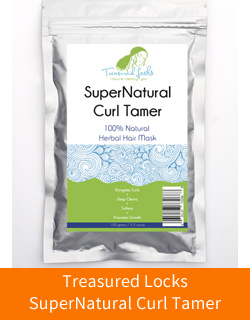
Biracial and African-American clients often complain about dull, dry hair. But, they skip the essential step of conditioning their hair after they wash.
Conditioner is vital because conditioner helps leave the hair feeling smooth by leaving a thin wax-like coating. Conditioner also helps lessen the breakage and pulling caused by tangling. Tangling happens when the cuticle of one strand of hair (which are more raised in Black and Biracial hair) catches on the cuticle of another hair. Conditioner also smooths over rough broken edges of the outer layer of hair. By smoothing over the outer layer of the hair, conditioner makes the hair feel softer, reflect light better and keeps it from tangling and breaking as much. Lastly, the protective coating left on by conditioner holds moisture and reduces static electricity.
Tips for deep conditioning Black hair
At least once or twice a month, after shampooing, I deep condition their hair.
I put one of the deep conditioning products on after shampooing and use either a HydraCap for 30 minutes or so. The moist, gentle heat allows the cuticles to open and the moisturizing product to penetrate the hair shaft. A good hot oil treatment could be done here instead.
How to properly moisturize African American hair
Probably the most important key to healthy African American hair care is moisture. Because of the structure of our hair, it tends to become dry easily. Dry hair lacks elasticity and therefore is brittle and prone to breakage. Moisturize with good products and do it often. Moisturizing is not necessarily the same as oiling. And it is certainly not the same as putting on what we used to call “grease” (see below). After the Deep Conditioning or Conditioning I moisturize.
Should I oil my hair and scalp?
The subject of whether to oil or not is controversial in African hair care. You’ll have to decide for yourself. My experience has been that, for my daughters, and me, oil is good for our hair. The right oil though is of vital importance. We only use all natural oils, mostly plant oils.We avoid mineral oil and petroleum based products. The one notable exception to the plant oil rule is emu oil (an animal oil). I love emu oil!
This is one of those places where you’ll really have to experiment. One of my daughters can use a heavier oil than the other. She can even use pure shea butter. The other daughter’s hair is too thin and looks weighed down with shea butter.
To apply the product
- Put a little of the product in the palm of my hand (and melt it, if it’s a solid product).
- Rub it on the hair and massage into the scalp.
I will not use anything that doesn’t melt at body temperature. That's why I avoid products with much beeswax, which melts at somewhere over 140 degrees Fahrenheit. That's well above the temperature your water heater should be set at and is hot enough to scald you. In other words, if you put beeswax in your hair, expect it to be there for a long time. If I happen to use something with a little beeswax (which has a relatively high melting point), I make sure it still melts at body temperature so that it doesn’t build up. I often mix a couple of the products. To be safe, I mostly use products that are liquid at room temperature.
Some of my favorite oils are:
- Shea Butter oil- has the wonderful properties of shea butter, but in a much lighter, liquid form. We began our company selling nothing but shea butter products. That was before shea butter was as popular as it is now. It’s still a key ingredient in many of our hair and skin care products.
- Emu oil- unbelievably good for scalp health. Improves circulation, reduces inflammation and has natural antiseptic properties. All help promote hair growth.
- Jojoba oil- the closest thing to natural sebum itself. Jojoba oil is technically a wax, not an oil. It can actually make oily skin less oily and dry skin more oily, In other words, it helps bring skin into balance. In the case of biracial hair care, we are generally seeking to add oil to the scalp.
- Castor oil- nice all natural plant oil that helps humectify (draw moisture to) the hair and scalp.
Tips for styling black hair
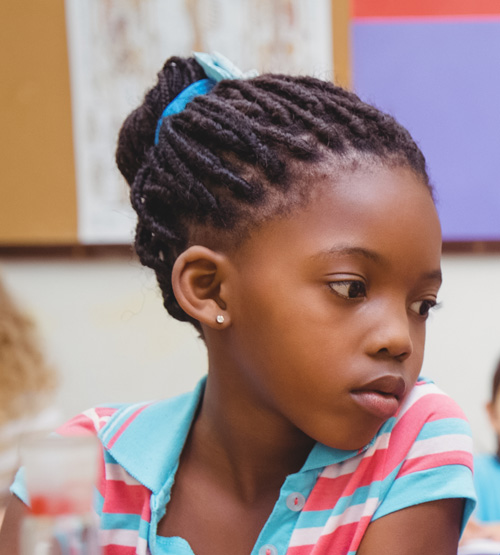 Generally, I style the girls’ hair without the use of styling products. Since they are young, mostly, they’re in ponytails, plaits, braids or the like. But, I mix it up and am very cautious about overly tight styles that can lead to scalp damage and even a certain type of hair loss. I especially avoid any styling products that might be drying to their hair. You’ll want to be very careful with hair sprays, mousse products, gels etc. But, there are a few aids I use for certain hair styles to provide hold or some straightening.
Repetition
This is very important. I repeat the moisturize and/or oiling steps above on a regular (almost daily) basis when I’m combing/styling the girls’ hair. Even if we’re in a non-comb style (like twists), I’ll touch them up just about daily, with something. I’m careful to avoid build-up and I don’t use a lot of product. But, I find that their hair is healthiest when receiving moisture on a very regular basis.
Controlling frizzyness and curliness in Black hair
As we said earlier, expectations are important when it comes to hair. But, we do have products that will help reduce the frizzyness, to an extent. SuperNatural Curl Tamer is a treatment that can be applied about once a month. It is all-natural and works to gently tame wild hair. We’ve had people of various ethnicities who are very pleased with it. It does not actually alter the structure of the hair like a relaxer would. It can be applied in the home and wears off after several weeks.
For those looking for a more permanent solution, a mild relaxer, a texturizer or a kiddie perm might be something to consider. Before you do though, please read our precautions when it comes to permanents/relaxers (see below). If you’re not familiar with them, please be informed before you make that decision.
Perms or relaxers for Black hair- should I or shouldn't I?
We often get questions concerning perms for young girls. Generally, we recommend against perms for prepubescent girls. Their hair and skin aren’t fully developed and changing their hair texture this early in life (especially a permanent change) can send the message to them that their hair isn’t good enough. Our older daughter is proud of her natural hair and says she will never perm it. But, our younger year old says she will. Ironically, it’s the older one who has the thicker hair. When they are old enough, they can decide on their own.
I use SuperNatural Curl Tamer on our older daughter. It has made her hair much more manageable and improved the texture. I can comb her hair in about half the time it used to take and I’ve seen a large reduction in the amount of hair left in the comb after combing.
Perming or relaxing the hair might seem like an easy solution to the kinky/frizzy/hard-to-comb problem. But, there are several things you should know before heading down this path. We’ve seen unaware mothers actually make things much worse by not knowing this before getting started.
Consider the following before you start perming.
- We do not recommend home box perms. People often ask us to recommend perms to them. We do not recommend any perms because we do not sell any. A beautician has told us that they are not the same quality as the salon perms. I don’t know if that’s true.
- But, even if it is not, a chemical relaxer or perm is a process that is best performed by a professional. Serious damage can be done to the hair (that can never be repaired, it has to grow out). A relaxer, improperly applied can do permanent damage to the scalp.
- The only compromise we would even contemplate on this would be to take your child to a local beauty school, if you just cannot pay the money the salons are charging. At least they’ll get the perm under professional supervision. And, the cost is usually a pretty small fraction of the cost in a salon.
If you insist on applying perms at home, please read and follow the instructions carefully.
- Do not keep perming the part of the hair that has already been treated. Only apply the perm to the new growth (the kinky stuff underneath). Perming the same part of a strand of hair over and over again thins it a little each time. Eventually, it will break. It’s not a question of “if”, it’s “when”.
- If you begin to relax your child’s hair, you must keep on doing it. When the natural hair reaches a certain length underneath the relaxed hair (hair grows from the root), the hair begins going through a transition stage. At this point, the hair is very vulnerable to excessive breakage. Generally speaking, a perm will be required every 6-8 weeks unless you are prepared to transition back to natural hair. Transitioning, without taking proper precautions can be very traumatic because of the breakage.
- If you relax your child’s hair, you weaken the hair and reduce the ability for the scalp to naturally oil itself. Permed hair is especially delicate and must be cared for even more diligently than natural hair. But, it's better to perm hair than to fry it with excessive heat trying to make it straight or to end up breaking it off by combing it too aggressively.
Ponytail do’s and don’ts
Bound hairstyles are great for little girls. They keep the hair from going wild and from tangling. I can often get a few days out of a style, too. But, these bound styles can lead to hair disaster- as in severe, and even permanent, hair loss.
Here are some dos and don’ts you will want to be aware of
- Don’t- use common rubber bands to hold her hairstyles. Also, avoid the bands with the metal clips, which grab and break kinky hair. Rubber bands cause too much friction on the hair and will eventually cause breakage. Buy covered bands or smooth bands made especially for hair.
- Do- remove any bands from the hair every night before bed time. Even the best bands should be removed before retiring for the evening.
- Don’t- pull the hair too tight. While it may be attractive, if you see your daughter’s eyebrows arching like she’s just had a face-lift you could be doing damage to her scalp. If you start to notice bumps around her hairline or elsewhere on her scalp, you could be causing traction alopecia. Normally, changing the hairstyle easily reverses this. But, if it is continued, this practice can lead to permanent hair loss.
Sleeping
Please remove tight bands from hair before sleeping. Using a satin pillowcase or a satin sleep cap will reduce friction with the pillow and help retain moisture in the hair. Cotton pillow cases against the hair can absorb moisture from the hair leaving it dry. Also, the friction (if you move a lot) can actually lead to breaking. Using a soft, smooth cap or a satin pillow case avoids these problems.
Should I trim my ends?
The ends of the hair are the oldest parts because hair grows from the root. If the ends are neglected, they can begin to split; causing damage even further down the hair. It may be counter intuitive. But, trimming the ends can actually lead to having longer hair. If you notice the ends of the hair are very dry, you might want to make sure you are doing a good job conditioning. If you notice they looked frayed, more tangled than normal or split, have them trimmed. I neglected this for a long time with my girls. But, since starting, I immediately noticed an improvement in the manageability of their hair. It was actually easier to comb just after trimming the ends.
Hair growth/ health supplements
I use the Treasured Locks H2G Hair Growth Supplement and Treasured Locks H2G Hair Strength Supplement. I have had a noticeable improvement in the condition of my hair and nails since using these supplements. Proper nutrition is essential to good hair health. Supplements can certainly help with that.
However, we do not recommend these products for children under the age of 13. They are formulated for the needs of an adult. Treasured Locks H2G Hair Growth Serum (applied to the hair and scalp) and Treasured Locks H2G Awaken Emu Oil Shampoo and Treasured Locks H2G Awaken Emu Oil Conditioner are also great for stimulating the best possible hair growth.
Summary
I hope you find this guide useful. I know that what you really want is a cookbook approach. But, for the reasons we stated at the beginning, that just isn’t possible. If you follow these general guidelines and learn how to look for signs of hair health, you can easily begin to make your or your child’s hair more manageable and healthy. After a few days, weeks and months of using the right products and the proper techniques, you will see a noticeable improvement.
If you have any questions after reading this, please do not hesitate to contact us. We’re glad to help.
Peace,
Tywana
Like this article? Please share it:
Related Articles