



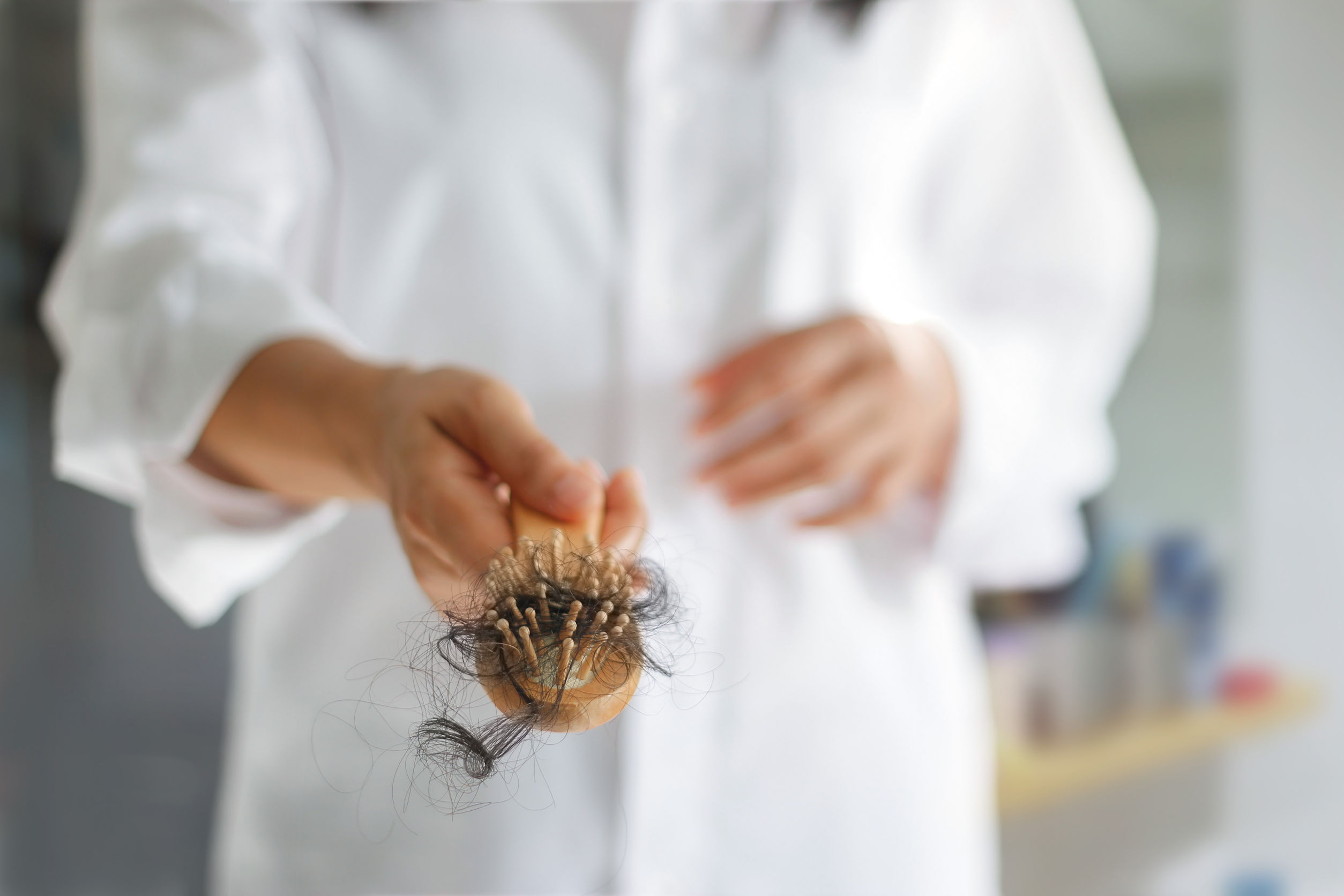
Hair Loss can be a devastating thing. Many men can live with the fact that genetics have predisposed them to lose their hair. Many men even embrace the loss. But, for some men and most women, losing one's hair can have a profound impact on them; causing stress and loss of self-esteem.
Until relatively recently, there were few alternatives to reverse hair loss short of wearing a wig or having hair transplant surgery. But, medical breakthroughs have made available very effective over-the-counter treatments These treatments have been shown to be safe and effective for a lot of people. However, there is not one single product that is great for everyone in every situation. Treasured Locks is glad to be able to offer some of the most advanced non-prescription treatments available.
This short article will cover these topics:
Hair Structure
Hair Life Cycle
Hair Growth and How to Make Hair Grow Faster
Hair Loss
Hair Loss Treatments
Hair Breakage and Hair Breakage Prevention
Summary
Hair loss is a complicated subject. There are many reasons why you might be experiencing hair loss (hair coming out at the roots or not growing from the root) or hair breakage (hair breaking anywhere along the shaft- usually near the end). We will first discuss the normal hair growth process, then we’ll talk about some reasons why your hair might not be growing as much as you’d like and what you can do about it.
Hair Structure
Hair is made of a form of protein. Hair grows from the roots. So, the oldest part of your hair will be the part at the ends- furthest away from your scalp. Hair is essentially dead. Once it has come out of your head, there is nothing you can do to improve the structure of the hair itself. However, there is a lot you can do to damage the hair. Once the damage has been done, repairs are limited. If the structure of the hair itself has been damaged, the repair to that particular part of the hair shaft is irreversible. You have to wait until the hair grows out more and cut off the damaged part or until the hair is replaced by a new hair (you will see soon this is a very long proposition). This is why a relaxer or a perm is really "permanent". Once a perm alters the structure of a piece of hair, that particular piece will never be the same. The new growth will be "virgin". Even the new growth of the same hair shaft.
Hair Life Cycle
On a normal head of hair, there are roughly 100,000 strands of hair, each going through its own cycle. Different hair strands will be at different phases at any given time. First, hair grows. This is called the anagen phase. This lasts for 4-6 years. The hair then rests. This is called the catagen phase. The hair follicle (the pocket in the scalp that holds the hair) actually regresses during this time. Then, hair sheds. This is called the telogen phase. Normally, about 90% of hairs are in the anagen phase at any point in time. The average person sheds about 50-60 hairs per day (the last phase of the hair cycle). These phases can be disrupted by stress, medicines, genetics (male pattern baldness), and other reasons. Again, keep in mind that during any particular time, each of the 100,000 hairs on your head is in a particular stage.
Hair Growth
On average, hair grows at a rate of about 1/2 inch per month. But, this varies by person based on genetics. Each person will have a maximum growth rate that she can attain. Some will be higher than the average. Some will be lower than the average. Nothing will increase your hair growth rate beyond whatever your personal maximum is. But, there are things that can help you reach your maximum. Nutrition, stress levels, and the health of the scalp affect the hair growth rate. Many people confuse hair growth with hair length. If your hair is growing at its maximum rate yet is breaking off, it will appear that your hair is not growing. Most people do not have hair that is not growing. Getting the proper rest, drinking enough water, treating your scalp well and getting the proper nutrition, including supplements (hair vitamins) can help you reach your maximum potential hair growth.
Hair Loss
Baldness or hair loss in both men and women is sometimes due to disease. Hair loss can be triggered by excessive weight gain or loss in a short period of time. Some hair loss is easily treated. Some is much more difficult to treat.
Reasons for hair loss include:
- High fever can cause temporary hair loss.
- Chemotherapy drugs can cause hair loss. Hair usually grows back after chemotherapy is stopped.
- Thyroid disorders- an over-productive or underproductive thyroid can lead to hair loss.
- Genetics- some people have a built-in trigger that causes the follicles to grow smaller and even shut down with age. This is known as male pattern baldness or female pattern baldness. (more on this later)
- Malnutrition- the lack of nutrients in the diet can cause hair loss. Anemia (lack of iron) can cause hair loss. Several other nutrients are also key to the production of healthy hair. This type of hair loss can easily be reversed by proper diet and/or supplements.
- Traumatic stress- Can lead to hormone imbalances and cause hair loss.
- Autoimmune disorders (alopecia areata)- exact causes have not been determined. Can cause hair loss from either just patches here and there to complete baldness on the whole body. Emu oil and other oils have been reported to help with this, in some cases.
- Post-pregnancy changes- hormone imbalances triggered during pregnancy can cause temporary hair loss.
- Mechanical- excessive pulling or twisting of the hair (trichotillomania) can cause hair loss that can become permanent. Some people actually pull the hair or twist hair as a nervous habit. But, wearing the hair in styles like braids or pulled back, if done too often and too tight can lead to hair loss, which may even become permanent.
- Local Scalp Conditions- Modern dermatology has concluded hair loss is triggered by several factors. These factors can include poor circulation to the scalp and sebum (a natural waxy substance produced by the scalp) clogging pores. Treating these conditions, improving circulation, and unclogging pores will help with this type of hair loss. Topical treatments as well as nutritional supplements can help.
- Male-Pattern Baldness- Male-pattern baldness is the most common type of baldness in men. A single, dominant gene controls this. The baldness usually starts at the temples and the hairline recedes. Often, the crown of the head will become thin or bald also. Some men only get balding in one or the other area. The hair in the balding areas starts out as long and thick and changes into fine, sprouts that grow at a slower rate. If a man begins to lose his hair during his teen years, there is a good chance he will become completely bald on the top of his head.
- Female-Pattern Baldness- The cause of the failure to grow new hair in female pattern baldness is not well understood. Generally, it is genetically predisposed (passed down), occurs with aging, and is associated with levels of hormones- especially androgens, the male sex hormones. Changes in the levels of androgens can affect hair production. For example, after menopause, many women find that the hair on the head is thinner, while their facial hair is coarser. Although new hair is not produced, follicles remain alive, suggesting the possibility of new hair growth.
The typical pattern of female pattern baldness is different from that of male pattern baldness. The hair thins all over the head, but the frontal hairline does not recede. There may be a moderate loss of hair on the crown (back top of the head), but this rarely progresses to total or near baldness as it often does in men. This type of balding usually begins around the age of 30 and becomes more noticeable at age 40; it can be more evident after menopause. This type of hair loss is permanent. Female pattern baldness is much more easily treated than male pattern baldness.
Hair Loss Treatments
As we discussed, there are several reasons why you may be losing your hair (which we define as the hair missing from the roots versus hair breaking). The normal aging process produces thinner and thinner hair for many people and slows down or even stops the growth phase in many of the hair follicles. Medicines, stress, and improper nutrition or improper treatment of the scalp can lead to hair loss. The general term for hair loss is alopecia. There are many types of alopecia ranging from temporary alopecia to permanent alopecia. Some forms are treatable. Some are not as treatable. If you have “male pattern baldness”, two treatments have been FDA approved to be effective at stopping and possibly reversing of the hair loss. Those treatments are Propecia (a tablet taken once a day). The other treatment is Minoxidil (sold under the brand name Rogaine). Propecia is for men only, leaving Minoxidil for women. Even Minoxidil and Propecia have limited ability to regrow hair. Their primary benefit is in stopping further hair loss. Once the treatments are started, they must be continued or the hair loss will begin to progress again. For this reason, they are called treatments, not cures. Nutritional supplements have been reported to be effective (but not approved by the FDA for male pattern baldness). For example, Saw Palmetto contained in Treasured Locks H2G Hair Growth Supplement is reported to have effects similar to those of Propecia.
Much hair loss is attributed to hormonal imbalances, particularly an overabundance of the male hormone. DHT (dihydrotestosterone) has been labeled a culprit. Many over-the-counter hair loss products target reducing the amount of DHT or decreasing its ability to become active. DHT shrinks hair follicles making it impossible for healthy hair to survive. When DHT becomes more active, it reacts with sebum and cholesterol found on and within the scalp. This DHT/sebum/cholesterol mix is shed into hair follicles, where it slowly narrows the tiny opening, causing the follicle itself to become smaller.
We divide our hair treatment products into two categories- Hair Growth Treatments and Hair Loss Treatments.
Hair Growth Treatments
Our hair growth treatments (our H2G Supplements and H2G Hair Growth Serum) are for people with mild to moderate hair loss and/or hair breakage. They are also for people who want to improve the growth rate and health of their hair. Hair loss and hair breakage can be caused by a number of factors. Our treatments will not be effective for every type of hair loss. Different treatments will be required based on the factors causing your hair loss and the severity of those factors. People who can generally grow a healthy head of hair but whose hair might be suffering from a lack of nutrients, from stress, or from improper maintenance can benefit from these hair growth products. They can help improve the rate of growth of hair also.- Treasured Locks H2G Hair Growth Supplement- Time released blend of vitamins, herbs, minerals, and dietary supplements designed to boost the growth rate and strength of your hair to its maximum potential.
- Treasured Locks H2G Hair Strength Supplement- Because hair is made of protein, it's important to have the right amount of the right type of protein to build the hair shaft. Treasured Locks H2G Hair Strength Supplement is a dietary supplement that improves the strength of hair, nails, and skin. The supplement is made of pure collagen that also helps with other bodily functions including joint function, weight control, body tone and more.
- Treasured Locks H2G Hair Shine Supplement- Especially for African hair, the right balance of oils is important. Treasured Locks H2G Hair Shine Supplement is a balanced blend of Omega 3, 6, and 9 Fatty Acids essential for radiant hair and skin.
- The other product we offer is Treasured Locks H2G Hair Growth Serum. Treasured Locks H2G Hair Growth Serum is a topically applied blend of all-natural ingredients scientifically proven to promote longer, healthier hair. Made from the highest quality Emu oil (AEA food grade certified), naturally extracted carrier oils and a proprietary blend of the finest quality, steam-distilled essential oils, our serum is unlike any other on the market. Emu oil and essential oils have been independently tested and shown to reduce inflammation, increase circulation and improve the growth phase of the hair life cycle.
Hair Loss Treatments
Our hair loss treatments are for those who are suffering from moderate to severe hair loss. These are the most aggressive hair loss treatments you can buy without a prescription. We offer two topical treatments that are applied to the scalp daily and a very effective hair loss shampoo. Please read all information carefully before ordering. Hair loss will show up in two ways. The hairs that are there get thinner and thinner. And, there are fewer hairs on the head at any one time. Hair loss treatments, like hair growth treatments, will be more effective for some types of hair loss than others. Genetic hair loss (male pattern balding) generally will require a stronger remedy than other types of hair loss.If your hair loss is from less than optimal nutrition or an unhealthy scalp, there are over-the-counter products that can help. Treasured Locks offers several. One of the products we offer is hair vitamins (taken orally) to help grow healthier hair. Our complete supplement line includes:
| Treasured Locks H2G Hair Growth Serum | Treasured Locks H2G Hair Growth Supplement | Treasured Locks Awaken Emu Oil Shampoo and Conditioner | Ajuven Hair Growth Stimulator for Men | Roots Salon Professional®- 5% Minoxidil | Roots Salon Professional® CARE - (Minoxidil free) | Roots Imperium Shampoo & Conditioner® | |
| Improve rate of hair growth. For mild to moderate hair loss |
Best | Best | Best | Best (packaged for men) |
Not required for mild hair loss. | Not required for mild hair loss. | Helps produce a thicker, fuller head of hair. |
| For moderate to severe hair loss. Need to grow new hair and prevent further hair loss. |
Less effective for severe hair loss | Less effective for severe hair loss | Less effective for severe hair loss | Less effective for severe hair loss | Advanced highly effective formula. Most aggressive treatment available without a prescription. | Treatment for those where Minoxidil is contraindicated. | Best for all with moderate to severe hair loss |
| Use by Women | Safe and effective | Safe and effective | Safe and effective | Safe and effective | Can be used by women for short periods of time. Recommend consulting with your doctor before beginning. Not for use by women who or pregnant or could become pregnant. |
Preferred treatment for most women. | Best for all with moderate to severe hair loss |
| For those sensitive to Minoxidil | Safe and effective | Safe and effective | Safe and effective | Safe and effective | Should be avoided by those sensitive to Minoxodil. Certain drugs combined with this product can cause a drop in blood pressure. | Best for those with moderate to severe hair loss and who are sensitive to Minoxidil. | Can be used by anyone with hair loss |
Hair Breakage and Hair Breakage Prevention
The second variable that will affect how long your hair can be is hair breakage. As we mentioned earlier, even if your hair is growing at a healthy pace and is breaking, you might think your hair is not growing. Hair will break if not treated properly. You should treat your hair like fine fibers. We have tips in other documents on proper hair care. This is especially important for kinky African hair, which tends to be both dry and fragile. The number one complaint we get from African Americans is they cannot “grow” hair. In reality, the real difficulty for most is keeping the hair they have grown. Their hair is breaking. Perms (relaxers), coloring, excessive styling with heat, and other things can weaken otherwise healthy hair. It is important to keep this in mind if you are doing these things to your hair. In addition to having supplements that can help grow hair, Treasured Locks has supplements that provide additional strength and the right balance of oils (essential fatty acids) needed for healthy, strong, shiny hair.
Following a good hair care regimen can help slow hair breakage. The right shampoo, conditioner, and moisturizers are essential to hair growth. Moisturizing all-natural or salon-grade shampoos should be used. Hair must be moisturized on a regular basis (for most people several times a week). Drinking plenty of water is important. We have written papers on hair care for natural hair, permed hair, and children’s hair. These are available in the Beauty 101.
Summary
This short paper is intended as a quick primer on the topics of hair loss, hair breakage, and growing longer hair. It is important to know the basics so that you can diagnose why your hair is not growing at the rate you would like or does not have the length you would like. If you have serious hair loss, we encourage you to see a dermatologist. A few minutes and a few dollars spent with a dermatologist might save you a lot of time and money spent trying to treat serious alopecia (hair loss) with over-the-counter remedies.
- Prevent hair loss through proper nutrition and maintenance of the scalp.
- Avoid stress as much as possible. This will give you stronger hair, to begin with, and make sure it's not falling out at the roots.
- Properly maintain the hair by using the right shampoos, conditioners, moisturizers, avoiding excessive heat, styling gently, and properly perming (if you choose to perm).
If you do these things, you will have the fullest, healthiest head of hair possible, given your genetics.